
How the circulatory system works?
The circulatory system is divided into three parts: the arterial system, the venous system and the lymphatic system. The arterial and venous systems have the job of holding the whole organism together, transporting blood loaded with nutrients and oxygen, which supply the body with energy, and removing waste substances into the environment around us. The lymphatic system is made up of a series of lymphatic vessels and nodes that run throughout the body.
The lymphatic capillaries are involved in collecting and transporting fluid and waste that has become stagnant in the body, and the nodes play a part in the immune system.
The signs that your circulation is not working properly
A feeling of heaviness or heat, tingling, heavy and aching legs, swollen ankles, visible and broken capillaries: these are often the warning that something is happening in the blood and lymphatic vessels, which begin to lose elasticity, dilating and weakening.
When circulation slows down, fluid and toxins become stagnant and are deposited in the interstitial space, the fluid that surrounds the cells, giving rise to oedema. Over time, if they are not treated, these oedemas increase in volume and compress the vessels, blocking the circulation of blood and lymph.
One in four women experiences these symptoms, and the figure rises to one in three among women over 40.
What influences circulatory problems?
The disorders that affect the circulatory system are influenced by a number of factors, including:
- An unhealthy lifestyle: a sedentary routine, smoking, alcohol, high heels, tight clothing, stress, a poor diet and so on.
- Excess weight: carrying extra weight demands more of the circulation and makes venous return more difficult.
- Constipation: a full bowel presses on the veins of the abdomen, which has an effect on circulation.
- Hormonal imbalances: during puberty or pregnancy, at the menopause, or when taking contraceptives, oestrogen and progesterone levels cause changes that can undermine the elasticity of the vein walls and cause fluid retention.
- Congenital factors: a constitutional laxity of the connective tissue can show itself in the tone of the blood vessels, so where there is a family history of varicose veins, circulation needs particular care.
Manual lymphatic and circulatory therapy
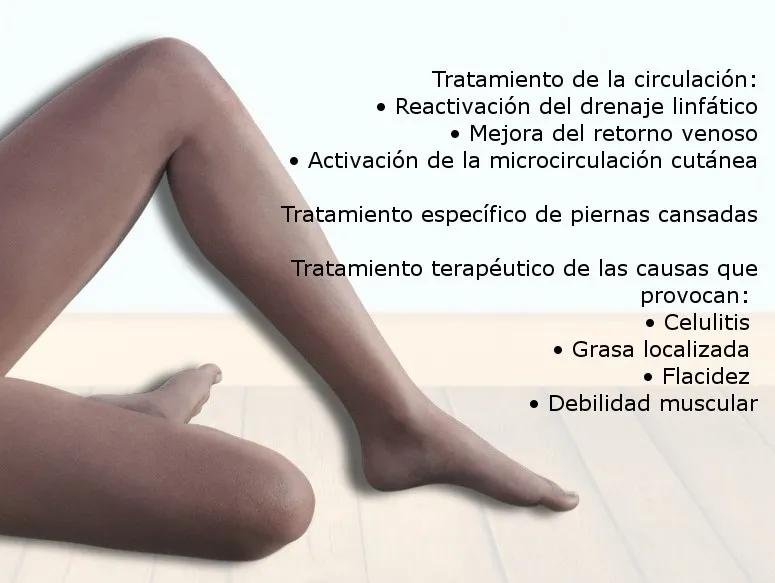
Manual lymphatic drainage, circulatory massage, mechanical muscle stimulation and lipomassage are, among others, effective "cleansers" for the body. They stimulate the elimination of stagnant fluid, speed up the circulation of lymph and boost the body's defences. These are complex techniques of massage and muscle stimulation that improve return circulation and unblock the lymphatic system.
Recent Comments